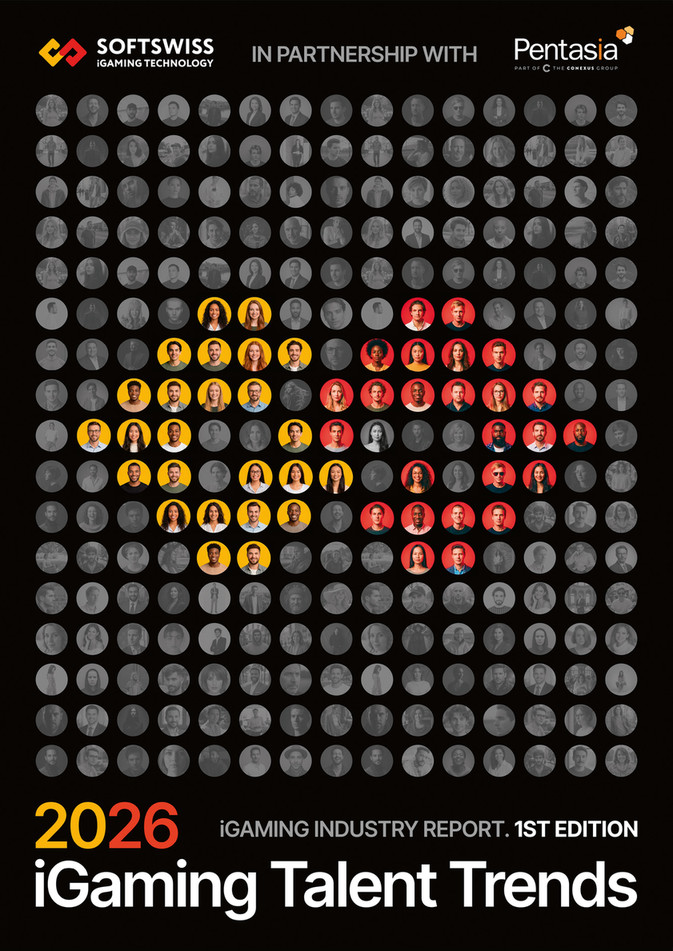
As the South African iGaming and technology sectors begin to transition from rapid expansion to operational maturity, companies are on the hunt for experienced technical staff while AI enters among juniors. According to a new research report by SOFTSWISS and recruitment specialist Pentasia, up to 60% of new roles may not even require a traditional university degree by 2030 due to these changes.
The recently released SOFTSWISS 2026 iGaming Talent Trends report comes as South African organisations grapple with a shifting regulatory landscape and a shallowing pool of senior technical expertise. The findings reveal that companies are moving away from large-scale entry-level hiring, prioritising mid-to-senior professionals who can deliver immediate business impact.
Artificial intelligence (AI) and automation are reducing routine work while increasing demand for analysis, monitoring and decision-making skills. Many companies already view AI literacy as a baseline capability across a growing number of roles.
As AI becomes embedded in everyday workflows, many roles are evolving toward strategy, oversight and system ownership – driving the demand for senior hires. For example, engineers increasingly focus on deployment, monitoring and system resilience, while marketing teams spend more time on strategy, data interpretation and stakeholder communication.
Given these shifts, companies say senior roles remain the hardest to fill, particularly in engineering, DevOps and cybersecurity. While many mid-level professionals are available, fewer candidates have the experience required to manage complex systems, make architectural decisions and lead technical teams.
The results of the research are based on an analysis of LinkedIn and other open-source data, company surveys, as well as a detailed review of 2025 hiring trends in the iGaming sector – a fast-growing online entertainment industry operating at the intersection of cloud technology, payments, data analytics and cybersecurity.
Denis Romanovskiy, Chief AI Officer at SOFTSWISS, confirms that the majority of their vacancies are for senior roles. “The expectation is that an employee will come in and start creating value within a few weeks. Every engineer goes through an interview with coding and system design assessments, with careful examination of systems thinking skills as well as soft skills. The ability to use AI tools in work is already considered a given and is not even discussed.”
According to Alastair Cleland, Managing Director at Pentasia, the hiring shifts due to AI and skills priorities aren’t limited to iGaming. “These hiring trends we are seeing in iGaming offer important insights for the broader workforce shifts as AI is definitively transforming entry-level jobs by automating routine, process-driven, and administrative tasks, rather than entirely eliminating them. This is causing a decline in junior hiring for roles like data entry, basic coding and research based roles, and this is happening across the global digital economy, with implications for fintech, e-commerce and other tech-enabled digital industries.”
The 7 steps iGaming companies are using to hire in 2026
The report outlines a seven-step framework designed to modernise the talent acquisition journey:
- Define the mandate, not the role: Shift from wish-list descriptions to outcome-based mandates. Define the business problem to be solved rather than a list of repetitive duties.
- Source beyond borders: Local talent pools are often too shallow for high-stakes roles. Opening searches globally can expand the candidate pool by as much as 340%.
- Screen for ‘intersection readiness’: Pure specialists are an operational liability. The strongest candidates operate at the intersection of technical depth, regulatory awareness, and business risk.
- Reduce decision latency: Slow decisions signal organisational inertia. In a candidate-driven market, transparency and speed are high-velocity closing tools.
- Onboard for immediate impact: Use AI to remove routine administrative friction so senior hires can focus on architecture and strategy from day one.
- Upskill as risk management: Continuous learning is very much a business continuity strategy to prevent talent obsolescence by 2030.
- Manage alumni as brand ambassadors: Reputation is shaped by those who leave. A professional “goodbye” turns former employees into effective talent pipelines.
The hardest roles to fill are currently found particularly in DevOps, core backend engineering, and cybersecurity.
Cleland notes that companies adopting remote-first models gain a significant advantage:
“The world is your talent pool. By leveraging emerging hubs, organisations can secure rare expertise that is often missing in local markets. Access to talent isn’t so much defined by proximity, but by how effectively a company can search and assess globally.”