While tech continues to transform economies and reshape careers, many of South Africa’s public schools, particularly those in historically underserved communities, struggle to offer even the basics of digital literacy. Access to reliable internet, up-to-date devices, and structured tech programmes remains the exception rather than the norm, limiting opportunities for both boy and girl learners to develop essential digital skills.
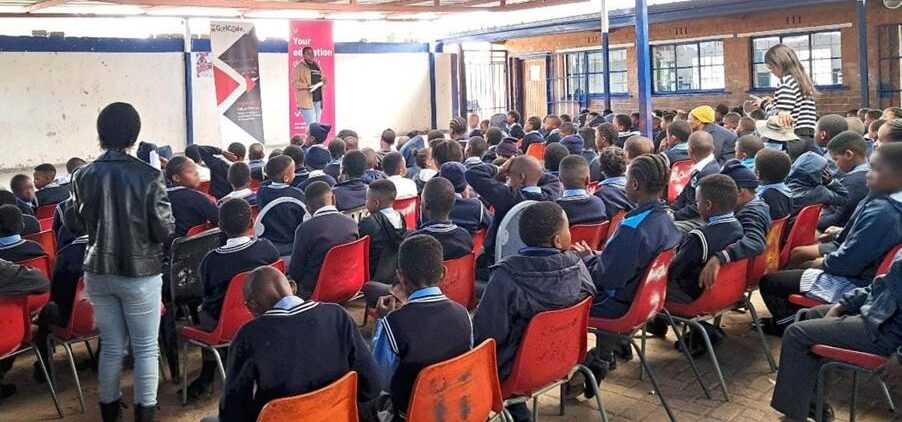
To help change this reality, Vuma, which has to date connected over 900 schools to free fibre internet, has partnered with GirlCode, a non-profit organisation committed to equipping young women with tech skills. Together, they have launched a 10-week co-ed coding programme aimed at bridging the digital divide, starting with two schools in Johannesburg: Zola Primary in Soweto and Mthimkhulu Primary in Vosloorus.
Unlike previous iterations, which were primarily geared toward girls and offered shorter, introductory sessions, this year’s Vuma Schools Coders Club is intentionally co-ed and built for depth, not just exposure. The 10-week format enables learners of all genders to progressively develop foundational skills in Scratch, HTML, and CSS, applying them to real-world issues that matter, such as creating safer, more inclusive communities. This shift marks a deliberate move toward broader inclusion and more sustained impact in the classroom.
Over the next 10 weeks, 2 000 learners in Grades 5 to 7 will be introduced to coding through hands-on lessons in animation, web design and interactive storytelling – all aligned with this year’s anti-bullying theme. The programme will culminate in a final hackathon between the participating schools.
“Past phases of the programme have brought out incredible potential in the learners,” says Zinhle Vilakazi, Junior Event Coordinator at GirlCode. “Girls and boys who never imagined themselves in tech are suddenly the ones helping their classmates debug code or build simple web pages. These moments of confidence matter because they open doors that were never even visible before.”
Vilakazi adds that in one session, Miss Masiteng, a teacher at Mthimkhulu Primary School, was surprised when a learner usually disengaged in class became one of the most enthusiastic participants.
“I’ve seen a remarkable transformation in our computer labs. Our learners are more enthusiastic than ever, and they often share how exciting and enjoyable it is to learn website development. We’re truly grateful to Vuma for equipping our students with valuable coding skills. It’s opened up a whole new world of possibilities for them,” says Mr. Mkhatshwa, Head of the Mathematics and Science Department at Zola Primary School.
“We wanted the learners to not just learn code, but to use it in a way that reflects their reality,” explains Taylor Kwong, Head of Marketing at Vuma. “The goal is that they’re able to use tech to tell stories, solve problems, and express themselves, which is, in itself, a form of empowerment.”
The long-term vision is to extend access to more learners across the country by rolling out the programme to additional Vuma-connected schools, creating a pipeline into future GirlCode initiatives such as masterclasses and Pan-African hackathons.
The Vuma Schools Coders Club is a simple but powerful reminder that, while education reform is shaped by many factors, meaningful change can also be driven by grassroots initiatives that improve everyday access to learning. . Sometimes, it starts with a 12-year-old building their first website and realising for the first time, that they could one day build a fulfilling career in tech.