

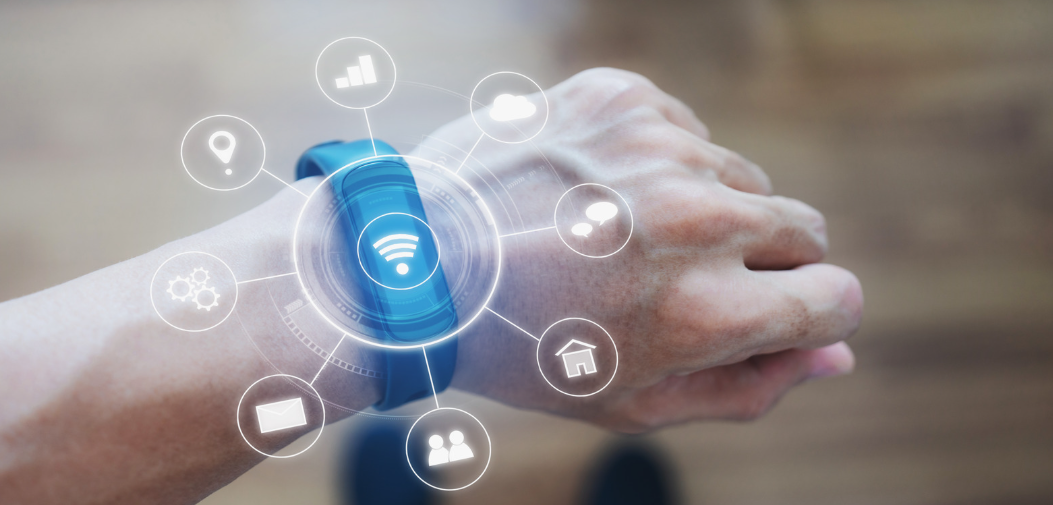
Your smartwatch knows you ran 5km this morning. It tracked your sleep last night. It even flagged an irregular heartbeat last week. Now, imagine if your life insurance policy knew all of that too and adjusted your cover, flagged health risks, or rewarded you before you even thought about filing a claim.
This isn’t science fiction. It’s the new frontier of group life insurance, driven by connected devices and artificial intelligence. And it’s happening faster than most people realise.
Connected devices alone generate data. AI is the turning point that makes that data meaningful. Together, they are shifting insurance from a static, reactive product into a dynamic, preventative service that supports people every day. Connected devices are already reshaping the group insurance landscape. From wearables and smart health tools to workplace telehealth platforms, insurers can now gain real-time insight into behaviour, health trends, and risk profiles. When paired with AI, this data can be analysed at scale to predict risk earlier, personalise cover and intervene before issues escalate.
From Data to Insight: Why AI Changes Everything
Fitness trackers and smart rings have been around for years, generating mountains of health data. But data alone isn’t transformative. AI is the breakthrough that turns those numbers into action, predicting risks earlier, personalising coverage, and intervening before small health issues become serious claims. “Most people only think about insurance when something bad happens,” says Josh Hart, CTO of digital insurer YuLife. “It’s a product built around worst-case scenarios. Connected devices flip that logic. They allow insurance to become a tool for living better, not just protecting against the worst.”
Hart draws a parallel with flood insurance. Traditionally, insurers paid out after water damage occurred. Today, leak sensors detect problems early, preventing catastrophic losses. Health insurance, he argues, should work the same way, using devices and AI to spot risks before they escalate.
Goodbye Admin, Hello Automation
As wearable tech becomes ubiquitous, many tedious insurance processes could vanish entirely. “The number of questions someone would have to answer when opening a policy could be reduced dramatically because smart watches might soon autofill the policy,” Hart explains. “We’re not removing the questions; we’re changing where the data lives.”
Instead of relying on static snapshots taken at sign-up, AI assesses risk continuously throughout a policy’s lifetime. This makes pricing more accurate, claims forecasting sharper, and capital requirements more efficient.
Hart compares this shift to Uber’s arrival. “When Uber launched, it technically broke existing regulations. Insurance will likely follow a similar path. Not a revolution, but an evolution.”
The upside? Fairer pricing for individuals and better business models for insurers. “If you can price more accurately, you may write slightly less premium, but you’ll grow your customer base by being better and faster.”
The Ethics Question: Who Wins?
With great data comes great responsibility. There’s a thin line between rewarding healthy behaviours and penalising people for circumstances beyond their control. “We don’t want to live in a world where someone can’t get insurance because they shared their data,” Hart warns. “The goal is to make insurance more efficient and fairer for the individual.”Transparency is non-negotiable. Customers need to understand what data is collected, why it matters, and how it benefits them. AI systems must be explainable, ethical, and designed to eliminate bias, not reinforce it.
Hart acknowledges the sensitivity around health data but believes the opportunity justifies the risk when handled responsibly. “If we do this well, we can build a model that helps people avoid getting ill in the first place. That’s better for insurers and for the insured.”
Why This Matters for South Africa
South Africa faces some of the world’s highest mortality rates from preventable or treatable conditions. This is precisely where connected devices and AI could deliver outsized impact.
YuLife’s platform combines behavioural science, gamification, and wearable data to encourage healthier daily habits. The results are measurable: people who engage with these tools demonstrably change their behaviours. AI scales these insights across entire organisations. For insurers, that means fewer claims and more predictable portfolios. For employers, it translates to healthier, more productive workforces. “If we know health behaviours are improving in real time, we don’t need to carry as much capital against a policy,” Hart says. “It allows us to run the business more efficiently.”
A Lifetime Relationship, Not a Transaction
For Hart, engagement is the ultimate differentiator. “Insurance is a lifetime relationship. It needs to provide value every day. “AI-powered personalisation will drive this future, delivering timely nudges, meaningful rewards, and relevant support without overwhelming users. YuLife’s gamified app was built around this philosophy, turning insurance into something people actually want to interact with daily. “Our goal was to build something worthy of five minutes of your life each day,” Hart says.
Connected devices are changing how insurance is priced. AI is changing how it thinks. Together, they’re making insurance more preventative, more responsive, and ultimately, more human.