The past two years have seen artificial intelligence move from the margins to the centre of South Africa’s higher education strategy conversations. Vice-chancellors, registrars, funders, regulators and other ecosystem contributors are all grappling with the same question: how can we ensure that AI fundamentally improves access to tertiary education instead of quietly deepening the inequalities that already define the sector?
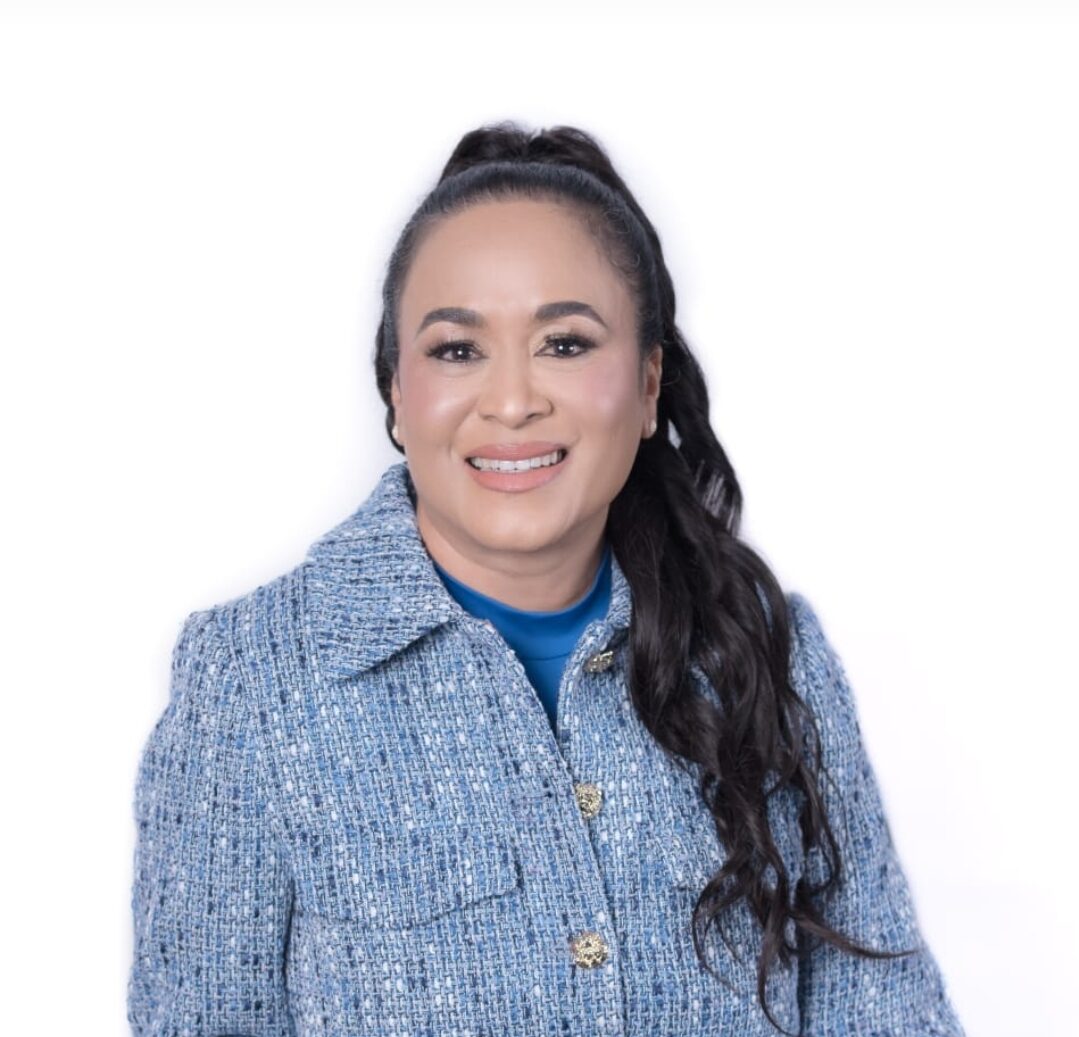
When it comes to the future of education in South Africa – especially around higher education – artificial intelligence sits squarely on the agenda. Sometimes as an opportunity. Often as a threat. Increasingly as both. “While some players in our sector are actively embracing AI, others are cautiously experimenting,” notes Mala Suriah, the CEO of Fundi. “Neither of these postures is neutral. Both are shaping what higher education in South Africa will look like in 2030 and, more importantly, who will be inside the lecture hall, physical or virtual, when that future arrives.”
For Fundi, what happens next largely depends on who gets to shape the technology’s adoption. “AI will not humanise higher education by accident,” says Suriah. “It will only do so if the humans who deploy it insist that it does.”
The stakes are substantial.
South Africa’s gross enrolment ratio for higher education sits at about 22%, against a National Development Plan target of 30% by 2030.1 Research from Stellenbosch University estimates that the “missing middle” – students whose families earn too much to qualify for full NSFAS support but too little to self-fund – now exceeds 340 000 students.2 More broadly, DHET data indicates that more than 500 000 young South Africans qualify academically for post-school study each year, yet fewer than half can be placed at a public university.3 Of those who do enrol, only 55% of contact students complete a three-year qualification within five years, Council on Higher Education data shows.4
AI as “enabler” or “disabler” has significant consequences for each of these groups.
Suriah explains that many of the students who are currently financially excluded sit in the “missing middle”: households earning between R350 000 and R600 000 a year – too much to qualify for a full NSFAS bursary, but too little to meet traditional loan requirements.5 “While NSFAS and other ecosystem players have begun responding through its Missing Middle Loan Scheme,6 the gap between policy intent and delivered outcomes remains wide.” Even Fundi’s own contribution of R10 billion of funding to the public sector (where a massive portion of the missing middle is found) over the past 30 years7 is not enough to completely close the gap.
Suriah argues this is exactly where AI can shift the economics.
“The conventional model for student lending was designed for a formally employed middle class with multi-generational banking relationships,” she says. “It systematically misreads a first-generation student from a household with informal income and no credit history – not because that student is unlikely to repay, but because the model doesn’t speak their language.”
Machine learning could change that language. Academic trajectories, engagement data, mobile behaviour and psychometric signals together predict completion – and therefore repayment – more accurately than a parent’s credit score. “The same models, trained on registration patterns and portal engagement, could flag students at risk of dropout weeks before they walk away, at a fraction of the cost of late-stage remediation.”
That is before one considers customer experience. “A single parent in Qwaqwa who can only take a call after her shift ends at 10pm deserves the same quality of financial aid support as a student who can walk into an office at 10am on a Tuesday,” she notes. “Anytime-anywhere service is not a product feature for our industry. For many of our students, it is the difference between staying in the system and dropping out of it.”
She adds that when it comes to AI adoption, Fundi is itself an experimenter rather than a finished case study. The company is on its own digital transformation journey, exploring AI across application assessment, student support and product design. That is partly why it is convening a public-private dialogue on AI in higher education next month.
“A conversation this consequential cannot be left to any single constituency,” she says. “Not to government. Not to universities alone. Not to the technology sector. And certainly not to private financiers. Students, funders, regulators, educators, employers and technologists have to sit at the same table.
“Applied well, AI could be the most significant access and throughput lever South African higher education has had in a generation,” she says. “Applied badly, or not at all, it will deepen every inequality we already have – just faster and at greater scale. We all have a responsibility to act and to act now,” she concludes.