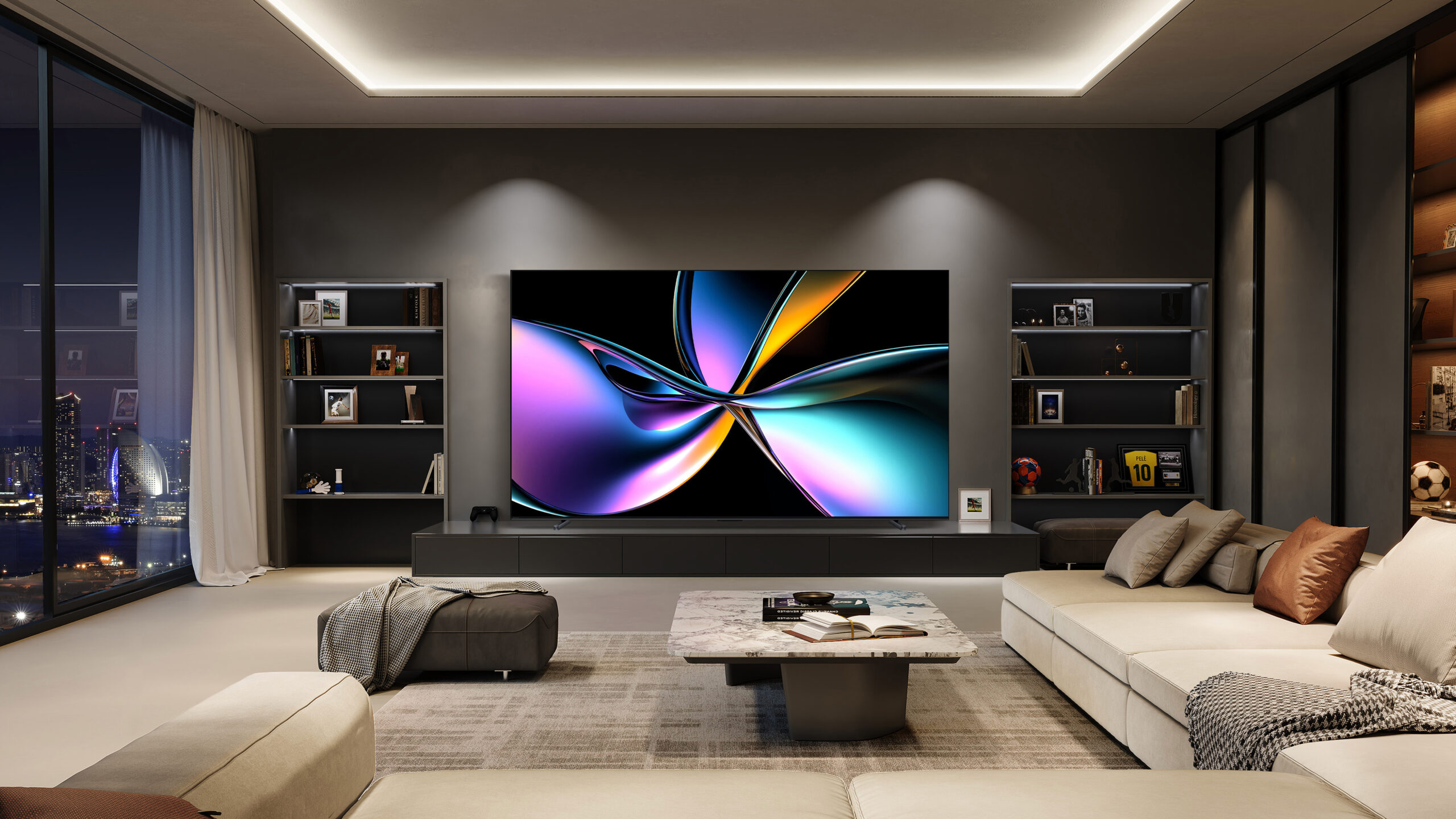
With the global AI television market projected to reach $56.4 billion by 2034, the smart television is no longer a passive content repository. It’s becoming an intelligence layer that anticipates consumer needs before they are expressed.
The era of the passive screen is over. For years, the smart television operating system was little more than a static grid of applications waiting for a command. Today, that paradigm is undergoing a structural collapse. Driven by the latest advancements in generative artificial intelligence, the television is transitioning from a display device to the central intelligence node of the household ecosystem.
This shift is not anecdotal; it is quantifiable. The global AI TV market, globally valued at $6.67 billion in 2024, is currently surging at a compound annual growth rate (CAGR) of 23.8%, projected to reach an astonishing $56.41 billion by 2034. At the 2026 Consumer Electronics Show (CES), industry analysts from ABI Research confirmed that AI has officially moved from concept to execution, noting that intelligence and autonomy are now central to product strategy and platform differentiation.
For the South African consumer, this global macro-trend is manifesting as a fundamental rewrite of digital service delivery: “We are no longer simply selling screens, we are delivering an intelligent service layer that resides in your living room,” notes Luna Nortje, Deputy General Manager at Hisense SA.
“The television is the largest and most powerful computing device in the average South African home. By embedding generative AI directly into the operating system, that screen becomes a proactive service delivery mechanism that understands context, anticipates preferences, and connects seamlessly to the broader smart home.”
Solving the Expectation Gap
This shift toward embedded intelligence is arriving precisely when consumer expectations regarding after-sales service are at an all-time high. A recent global survey by Salesforce found that 90% of consumers consider the post-purchase experience to be just as important as the quality of the product itself. The 2026 Qualtrics Customer Experience Trends Report also revealed that South African consumers now demand speed, seamless service, and deep personalisation as the baseline standard.
Yet a clear expectation gap persists. The same research shows that 83% of consumers see substantial room for improvement in the post-purchase experience, while three in ten firms are already placing growth at risk through generic, poorly executed AI self-service.
This is where the true value of an embedded, generative operating system becomes clear. Traditional after-sales service is reactive, waiting for the consumer to report a problem. Embedded AI platforms transform the post-purchase experience into a proactive, continuously evolving relationship between the user and the hardware.
The VIDAA OS Proof Point
The practical application of this trend is best observed through the evolution of proprietary platforms such as Hisense’s VIDAA Smart TV OS. Built on a secure Linux foundation, VIDAA currently powers over two billion hours of content consumption globally every month. However, its current iteration serves as a living proof point for the industry’s shift toward generative service delivery.
Through strategic collaborations with global technology leaders, including Microsoft, platforms such as VIDAA are embedding generative AI capabilities directly into the ecosystem. Integrations like Microsoft Copilot enable the television to respond to complex queries, summarise information, and manage digital tasks through natural language processing, removing the need for a secondary device.
The integration of services like Xbox Cloud Gaming signals a further fundamental shift in entertainment delivery. South African gamers can access world-class, console-quality titles directly through their TVs, with AI architectures optimising latency and visual performance in real-time. No physical console is required. The screen itself has become the service provider.
The End of the Search Bar
The defining metric of a modern operating system is how quickly it can deliver exactly what the user wants. To this end, the traditional search bar is being replaced by intent-driven discovery engines. Advanced “fuzzy search” capabilities utilise AI-driven algorithms that understand user intent even when search terms are imprecise, misspelled, or conversational. This is augmented by sophisticated voice assistants, which now support dozens of languages and recognise complex, multi-step commands. Whether a user asks for “movies directed by Christopher Nolan from the 1990s” or commands the system to “dim the lights and start the next episode,” the AI parses the request and executes the service delivery instantly.
The Golden Thread: Hardware Built for Intelligence
An intelligent operating system requires hardware capable of translating its commands into sensory reality. The software revolution is therefore driving a parallel hardware evolution. Modern displays must be engineered specifically to maximise the potential of these AI platforms. Technologies, including the Hi-View Engine X, utilise real-time AI analysis to adjust colour, clarity, and peak brightness frame-by-frame, ensuring that the content delivered by the operating system is rendered with absolute precision.
The power of intelligent service delivery is available across Hisense’s current South African television lineup, powered by the VIDAA AI platform (prices reflect recommended retail pricing in South Africa as of April 2026. Subject to retailer variation).
Flagship ULED & Mini LED Series:
-
Hisense 100″ Smart Mini LED TV (100UX): R 149,999.99
-
Hisense 85″ Smart Mini ULED TV (85U7Q-PRO): R 29,999.99
-
Hisense 85″ 144Hz Mini ULED Smart TV (85U7Q): R 22,999.99
-
Hisense 65″ Mini ULED Television (65U8Q): R 19,999.99
-
Hisense 65″ Mini LED 144Hz Smart ULED TV (65U7Q): R 11,999.99
-
Hisense 65″ Mini LED Smart TV (65U6Q-PRO): R 11,599.99
Premium QLED & UHD Series:
-
Hisense 98″ QLED Smart TV (98Q6Q): R 29,999.99
-
Hisense 85″ UHD 4K VIDAA Smart TV (85A6Q): R 15,999.99
-
Hisense 70″ Smart UHD TV (70A6Q): R 9,999.99
-
Hisense 55″ UHD 4K VIDAA Smart TV (55A6Q): R 5,499.99