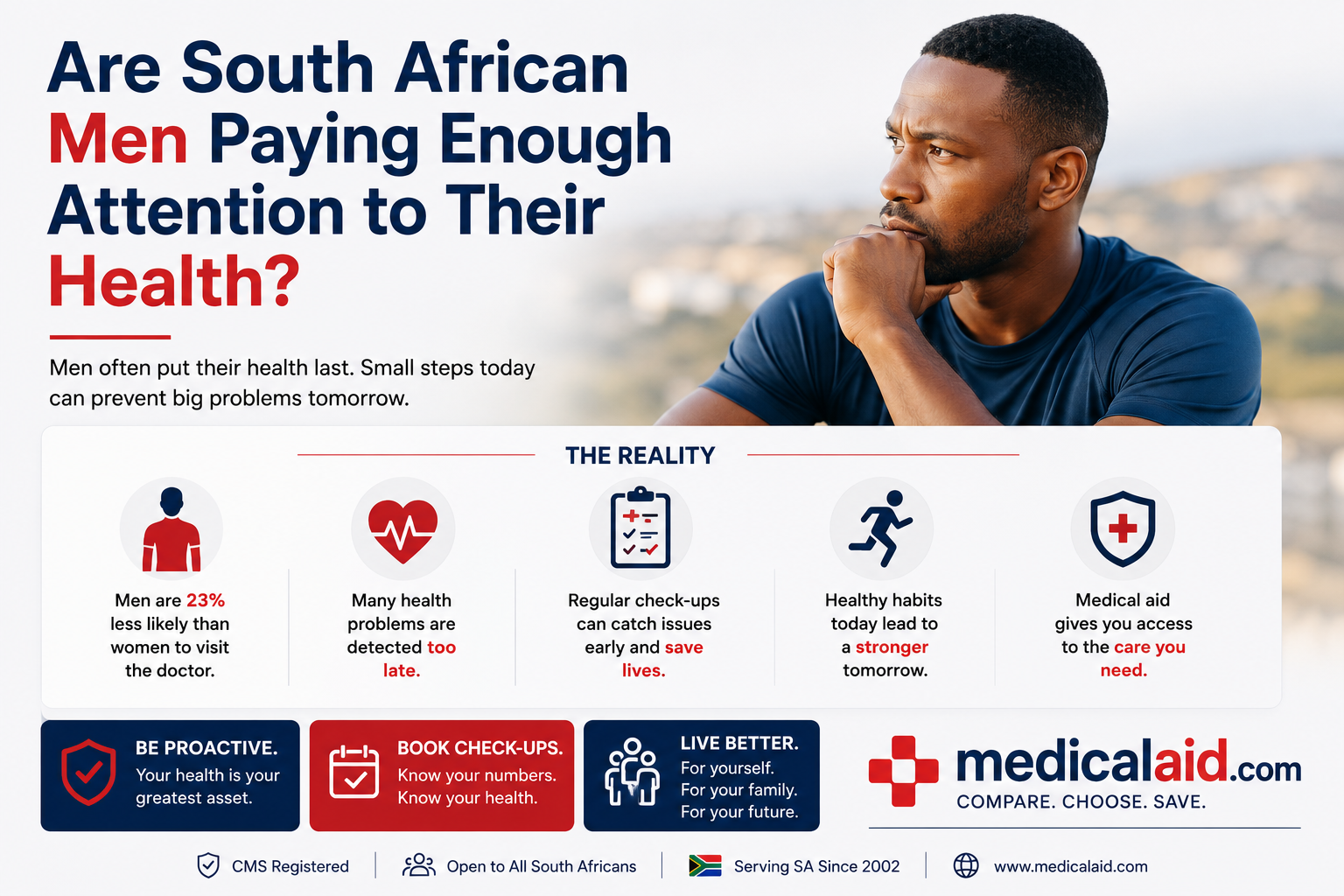
As Men’s Health Month draws attention to men’s wellbeing, an uncomfortable question remains: why do so many men wait until something is wrong before taking their health seriously?
It is a pattern healthcare professionals see repeatedly. A man spends years looking after his family, building a business, paying the bills and meeting his responsibilities, only to find himself sitting in a doctor’s office once symptoms can no longer be ignored.
The challenge is not necessarily that South African men do not care about their health. More often than not, other priorities simply take precedence.
Work deadlines, school fees, bond repayments, vehicle instalments and the rising cost of living have a way of moving personal health further and further down the list. Routine check-ups are postponed, screenings are delayed and minor concerns are brushed aside with the promise of dealing with them later.
Unfortunately, many health conditions do not wait for a convenient time.
One area that continues to concern healthcare professionals is prostate health. As men age, changes in the prostate become increasingly common. While some of these changes are harmless, others require medical attention.
According to CANSA, men often experience no symptoms during the early stages of prostate cancer. By the time symptoms appear, the disease may already have progressed.
Later symptoms can include more frequent urination, particularly at night, difficulty starting or stopping urination, a weak urinary stream, pain during urination or ejaculation, or blood in the urine or semen. In more advanced cases, pain may develop in the lower back, hips or upper thighs.
Many men dismiss these warning signs as part of getting older. Others simply hope the problem will resolve itself. Yet the risks cannot be ignored. Sabinet African Journals in 2024 recorded that “Prostate cancer (PCa) is one of the most commonly diagnosed cancers among men, with a rising global incidence,” while a global study by the World Health Organization in 2020 recorded PCa as “the second most common cancer diagnosed among men of all ages.”
That is why healthcare professionals generally encourage men to discuss prostate screening with a doctor from around the age of 50, or earlier where there is a family history of the disease.
Physical health, however, is only part of the picture.
Over the past few years, financial pressure has become an increasingly significant contributor to stress and mental health challenges. Rising food prices, fuel costs, interest rates and household expenses continue to place strain on South African families.
Even today, many households still rely on a single primary income earner. These men often find themselves supporting children, spouses, ageing parents and extended family members while managing debt, housing costs and career uncertainty.
Stress seldom arrives all at once. It tends to build gradually through poor sleep, fatigue, irritability, anxiety, difficulty concentrating and strained relationships. Health concerns such as high blood pressure may also begin to emerge.
The problem is that many of these warning signs are dismissed as part of everyday life. Men often continue pushing forward, convinced things will improve once workloads become lighter or financial pressures ease.
At the same time, healthcare needs rarely remain the same throughout life.
Many younger men visit a doctor only when they are ill or injured. By their forties and fifties, however, annual health screenings, blood pressure monitoring, cholesterol testing, diabetes screening, specialist consultations, chronic medication and diagnostic investigations often become a far more regular part of life.
The costs associated with healthcare do not always arrive through a dramatic medical emergency. More often, they accumulate gradually over time. This is one reason healthcare advisors like medicalaid.com encourage people to review their medical aid benefits periodically rather than focusing solely on monthly contributions.
As healthcare needs evolve, factors such as hospital cover, specialist benefits, chronic disease cover, oncology benefits, mental health benefits, preventative screening programmes, network restrictions and possible co-payments become increasingly relevant.
The cheapest option is not always the most suitable option when healthcare requirements begin to change.
Perhaps the bigger issue is that many men spend years protecting their families, providing for their households and planning for the future while paying very little attention to their own wellbeing.
No one can predict exactly what health challenges may lie ahead. What can be controlled is the decision to schedule a check-up, ask questions, undergo screening when necessary and address potential concerns before they become serious problems.
For many South African men, the most important healthcare decision may not be the one made after a diagnosis. It may be the decision to act before anything appears to be wrong.