23 April 2025: Unsold inventory is one of the biggest problems for fashion retailers, with mounting levels of excess stock being discarded, incinerated or left to waste. The rise of fast fashion coupled with the rapid growth of e-commerce has perpetuated a textile waste epidemic.
As a result, global fashion is in the middle of a sustainability crisis, made even more apparent by the increased pressure of the Ecodesign for Sustainable Products Regulation requiring EU brands to report on the management of excess stock in 2025, and making it illegal for brands to destroy unsold products in 2026. The urgency to find sustainable solutions to reduce the percentage of unsold inventory and decrease annual global carbon emissions has never been greater.
Africa’s fastest growing fashion venture, FARO, is using AI to turn $425B in unsold global fashion into an opportunity. The company enables brands to reduce their overstock and environmental impact, with traceable distribution in emerging markets.
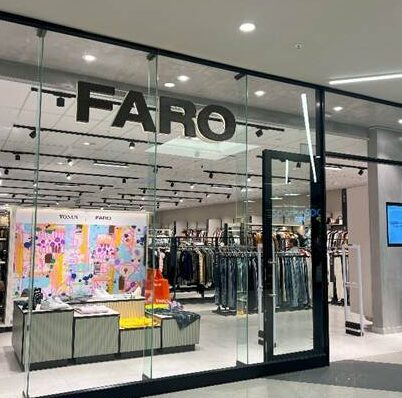
FARO has flipped the switch on fashion retail by creating high-end shopping experiences where customers have the opportunity to own and wear global brands that might otherwise be out of budget and in turn, offers a sustainable solution to global brands struggling with unsold inventory.
FARO’s operating system, FARO IQ, is transforming how fashion meets demand. Powered by AI and predictive analytics, it learns from past sales, forecasts future trends, and tags each product with detailed attributes. This allows FARO to allocate the right stock to the right stores based on real customer behaviour – boosting sell-through and reducing waste. The same tech drives FARO’s personalised marketing, delivering targeted messages to shoppers based on what they actually buy. While legacy retailers rely on spreadsheets and manual guesswork, FARO’s AI makes smart decisions in seconds – optimising planning, buying, pricing, allocation, and marketing across the entire supply chain.
“By designing AI-powered agents to automate complex workflows, we are able to streamline our operations, a key differentiator from legacy retailers”, explains FARO co-founder and COO, Amber Penney.
FARO founders Amber Penney, David Torr, William McCarren and Chris Makhanya, wanted to change the idea that high-end fashion was only available to a small percentage of the population, with textile waste being at the forefront of their solution. This approach not only ensures affordability for consumers but also reduces the industry’s environmental footprint.
“Our mission is to make high-end global brands accessible to South Africans, delivering unrivalled value to customers in an elevated shopping environment. We work with top global brands like G-Star, ZARA, Levi’s, Guess, Jack & Jones and Steve Madden, sourcing last-season stock at a discount and passing these low prices onto our customers,” adds FARO co-founder and CCO, Chris Makhanya.

FARO has already had a meaningful impact on local unemployment, creating over 150 skilled jobs in their supply chain in the first year, with projections to create over 4,000 jobs by 2028 across the organisation. With every store that opens, more jobs are created both in-store as well as throughout the entire supply chain.
While many local retailers in South Africa focus solely on value, FARO is different, believing that shopping should feel luxurious for everyone. Each customer should feel stylish, valued, and unique when they walk in, and out of, their stores. Penney explains that at FARO, there is a major focus on personalised service, beautifully curated spaces, and an elevated shopping experience.
Quips Penney, “We like to think of ourselves in the realm of high-end fashion and curated spaces… minus the exclusivity and unattainable prices.”
The first store opened in Liberty Promenade Mall, Mitchell’s Plain, Western Cape, bringing premium fashion to a market where accessibility to high-end brands has traditionally been limited, ensuring that style and quality are no longer out of reach.
Since then, FARO has grown rapidly, with 6 stores in N1 City, The Glen, Fourways Mall, Bayside Mall, Mamelodi Mall. In late 2024, FARO closed a $6M funding round led by JP Zammitt, the President of Bloomberg, to fuel store expansion and strengthen its proprietary tech platform. The team have ambitious plans to expand to 1,000 stores across South Africa and other emerging markets in the next few years.
FARO, a proudly South African startup, is more than just a brand, it’s a movement that champions value, dignity and sustainability. As consumer preferences evolve, the market continues to witness a surge in demand for diverse fashion choices, value-based purchasing, and sustainable clothing options.
For more information, visit: https://www.faro.co
Instagram
Tik Tok