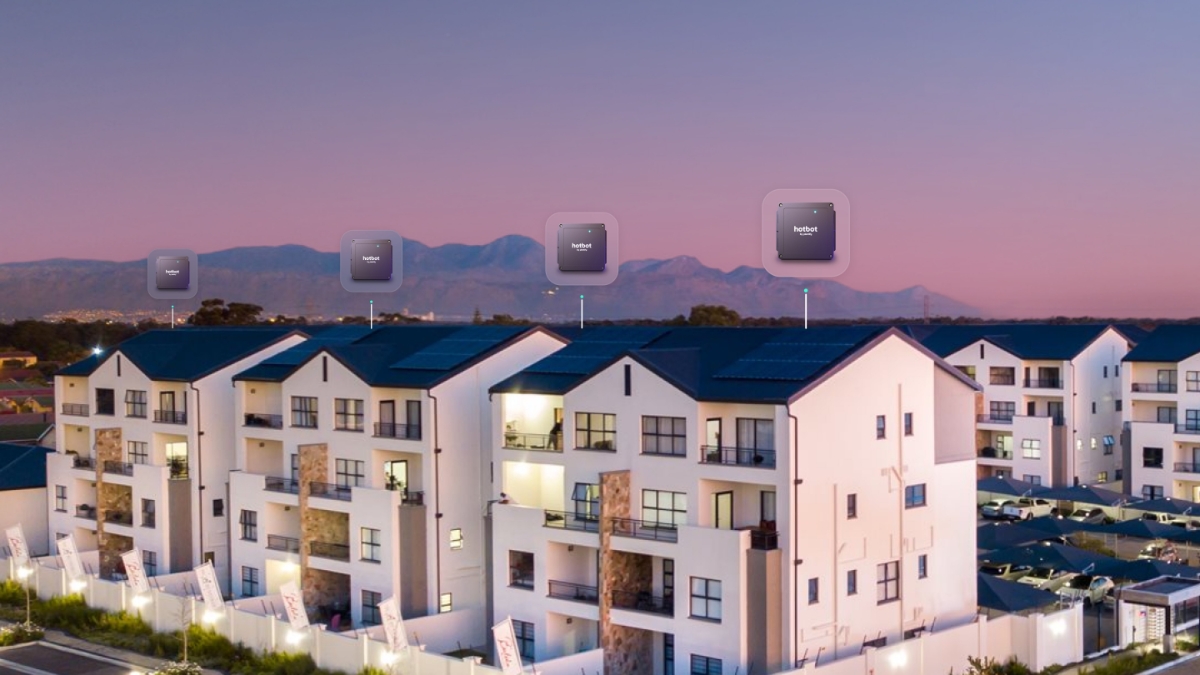
Balwin Properties and Plentify tackle South Africa’s ‘hidden’ energy distribution crisis
As South Africa navigates ongoing energy constraints and rising electricity costs, attention is increasingly turning to a less visible but significant contributor to electricity demand – residential water heating.
“Electric geysers are the largest energy loads on residential developments, accounting for up to 40% of all electricity consumption,” says Matthew Whalley, Managing Director of Balwin Properties. This makes the electric geyser one of the largest drivers of residential demand, yet most systems still operate on fixed schedules or manual timers, heating water regardless of whether it is needed.
This pattern contributes to unnecessary electricity use and intensifies pressure on the grid during peak demand periods, particularly in the evenings and during recovery phases following power outages.
“While much focus has been on South Africa’s generation problems, there is a much bigger challenge around power distribution, ensuring energy is available where it’s needed and managing how and when it is used. We need to stabilise demand on our massive estates to allow for the realities of the current grid while building sustainable developments for both our clients and the environment,” adds Whalley.
A three-year case study
A large-scale deployment of intelligent geyser management technology across several residential developments is now offering a glimpse into how this challenge could be addressed.
In collaboration with South Africa’s largest residential developer, Balwin Properties, energy tech company Plentify has introduced an intelligent geyser management system designed to optimise when water is heated within households. Rather than operating on fixed schedules, the system adjusts heating based on three key signals – when residents are likely to require hot water, when solar energy is available, and when electricity tariffs are lowest.
When deployed across large residential communities, these devices, called HotBots, can collectively shape electricity demand to match those three signals.
Across 13 Balwin developments, more than 7,500 intelligent geyser controllers have been installed. Data from these estates – comprising diverse geographies, energy consumption profiles and household income levels – proves that coordinated residential demand management can produce measurable system-level benefits.
These include:
● 46% reduction in peak electricity usage
● 36% reduction in short-term demand spikes
● 79% increase in solar energy utilised for water heating
● More than 1MWh of solar energy used for hot water
● 1,458 tonnes of CO2 emissions avoided
● Over R1 million in cumulative savings for residents
This technology also enables Balwin to achieve SANS and EDGE compliance, cementing their position as a leading global developer of green buildings.
According to Kailas Nair, Chief Growth Officer at Plentify, “Together with Balwin, we have built the most successful residential load management programme in South Africa, and the results have exceeded our expectations.”
The implications extend beyond household energy efficiency. By reducing electricity demand during peak periods, these developments have also gained access to load curtailment programmes offered by Eskom and municipalities, meaning that selected estates can be protected against loadshedding, without needing to install expensive batteries..
This Virtual Power Plant signals a potential shift in how residential communities interact with the electricity system.
Historically, homes have been treated as passive electricity consumers. But as electricity systems become more dynamic and renewable generation increases, managing when energy is used becomes just as important as how much is used.
Demand-side technologies that optimise electricity consumption could therefore play an increasingly important role in stabilising power systems while enabling greater integration of renewable energy. The results from Balwin’s developments also illustrate how residential demand management can increase the value of rooftop solar installations by aligning energy consumption with solar generation periods.
As countries transition toward more decentralised and renewable energy infrastructure, residential demand management may become a key component of grid resilience –transforming homes from passive consumers into active participants in the energy system.