-
AI-influenced e-commerce is forecast to reach over USD700 billion by 2029
-
Loyalty becomes a strategic growth engine that shapes consumer decisions
-
84% of Millennial consumers join free loyalty programmes, but engagement remains uneven
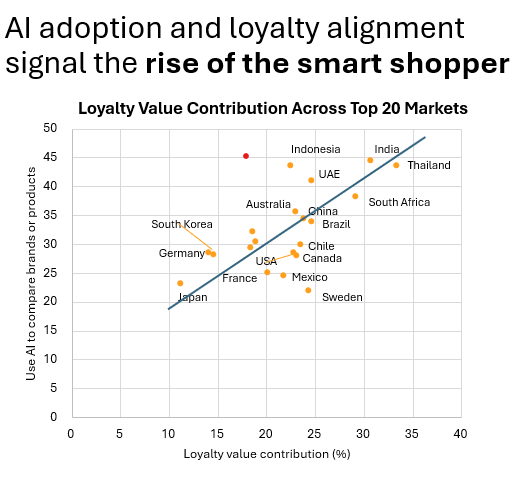
AI-influenced e-commerce is forecast to exceed USD700 billion by 2029, underscoring the role of intelligent loyalty systems in retail, according to market intelligence company Euromonitor International.
Euromonitor’s Top Five Trends in Loyalty for 2026 identifies shifts in how brands engage and retain consumers. Loyalty
Nadejda Popova, Global Head of Loyalty at Euromonitor International, said:
“AI is fundamentally reshaping how loyalty is earned and sustained. As intelligent systems increasingly influence product discovery and decision-making, brands are no longer just competing for consumer attention—they are competing to be selected and recommended within AI-driven ecosystems.”
Euromonitor’s top five
-
Loyalgentic:
GenAI chat platforms have become a key consumer touchpoint, enabling natural conversations and product discovery. The next step is loyalty agents – AI tools that act for consumers. They can initiate engagement, redeem rewards and trigger actions without manual input, from booking flights and restaurant reservations to applying rewards automatically. -
Loyalty as a wellness journey:
Loyalty programmes extend beyond transactions to reward behaviours linked to fitness, nutrition and mental wellbeing, tapping into a USD1.2 trillion global wellness market. Brands that support these choices are building deeper trust. -
The power of choice-based rewards:
Consumers want greater flexibility and control over how they use rewards. According to Euromonitor’s Voice of the Consumer: Loyalty Survey 2025, 54% redeem benefits at least once a month, highlighting the rising expectation towards real-time, personalised and choice-driven engagement. -
Micro content, macro loyalty:
Short-form video, micro-dramas and livestreaming are rapidly becoming drivers of commerce. 27% of global TikTok users click on links to purchase directly from video content, reflecting the growing role of entertainment-led shopping experiences. -
Loyalty for the high-net-worth consumer:
Loyalty programmes are targeting affluent consumers with personalised, experience-led rewards, reflecting a USD1.5 trillion global luxury market. These programmes are invitation-only or highly personalised, designed for selected customers.
Popova adds: “Loyalty is no longer just about rewards – it is becoming an intelligent engagement system that shapes decisions in real-time. Brands are shifting towards simpler, more immediate and relevant rewards.”
Participation is high, but meaningful engagement still lags
While loyalty programme enrolment continues to grow, engagement remains a challenge. Globally, only 19% of consumers redeem rewards weekly, while 28% do so only a few times a year, according to Euromonitor’s Voice of the Consumer: Loyalty Survey, highlighting a gap between sign-ups and usage.
Consumers often fail to redeem rewards because the effort outweighs the value. Barriers include slow point accumulation, poor reward visibility and points expiring before use.
According to Euromonitor’s Voice of the Consumer: Loyalty Survey, 84% of Millennials join free loyalty programmes, but engagement remains uneven. At industry level, 63% of the top 100 loyalty programmes underperform engagement benchmarks, reinforcing the need for simpler, more relevant rewards.
For more information, watch the webinar: The New Engines of Loyalty: Who Will Drive the Next Era of Choice?