
Sumsub, a leading full-cycle verification platform that enables scalable compliance, launched Adaptive Deepfake Detector. The new model tackles the prevailing issue of traditional offline solutions being unable to detect the newest deepfake scams. Unlike its predecessors, Sumsub’s deepfake detector effectively spots emerging types of sophisticated fraud through its ML-driven detection tool with instant online self-learning upgrades.
While the solution is launching globally, its relevance is especially clear across Africa, where fraudsters are shifting from low-effort scams to more sophisticated AI-enabled attacks.
This shift is reflected in Sumsub’s Identity Fraud Report 2025–2026, which found that Tanzania recorded the highest fraud rate on the continent in 2025 at 5.0%, while Uganda recorded a fraud rate of 4.7%. Côte d’Ivoire also saw fraud rise by 51% year-on-year to 4.5%. In Kenya, despite an overall decline in fraud, deepfakes already account for nearly 10% of fraud attempts, highlighting how AI-enabled fraud is becoming more prominent even in markets where traditional fraud is being reduced.
In South Africa, this shift is already visible. The country’s overall fraud rate declined by 31% year-on-year to 1.4% in 2025. However, deepfake incidents increased by more than 269% YoY, showing that AI-enabled impersonation is quickly emerging as the next frontier in South Africa’s digital identity landscape.
Periodic model updates reveal a systemic vulnerability, namely that, between upgrades, which can take weeks or months to launch and implement, new threats can bypass defences and cause real damage to digital app users and companies. The key differentiator of Sumsub’s new tool lies in its detection accuracy, which stems from continuous model learning from fraud signals across multiple layers, allowing it to adapt within hours, rather than weeks or months.
For businesses operating in digital finance, payments, crypto, iGaming and other high-risk online sectors, the findings highlight a growing need for fraud prevention systems that can adapt in real time, rather than relying only on periodic model updates.
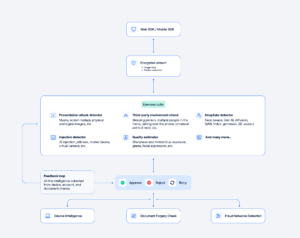
“In 2026, the threat landscape has evolved, demanding risk management teams to respond with the next-generation fraud prevention models. Modern deepfakes can no longer be detected by the human eye, and decision-making should be based on multiple signal analysis in real time”, said Nikita Marshalkin, Head of Machine Learning at Sumsub. “That’s why we launched our upgraded Deepfake Detector, offering clients not just a tool, but rather an online learning system that combines advanced document checks, device intelligence, and fraudulent networks analysis to complement deepfake detection capabilities. When the price of failure is too high, a comprehensive approach to the increasing AI-driven fraud challenge is the answer we need”.
In current deepfake detection, risk teams cannot rely solely on visual content inspection. The full context of the user session should be taken into account. Apart from generating deepfake images, voices or videos, fraudsters also use various injection methods, thus providing a separate data layer for prevention systems to check and monitor.
From a technical standpoint, real-time detection based on the ‘online learning’ model implies no waiting time for scheduled training cycles and no need for regular human review to stay up-to-date.
Instead, the new solution:
- Continuously learns new patterns, including emerging deepfake types or injection methods, immediately incorporating them into the known threats list;
- Signals are collected from multiple sources, not on a single anomaly vector. The multilayered fraud detection system analyses documents, geolocation, IP address, device signals, facial biometrics (liveness) data, and cross-checks verification information from multiple users to spot fraudulent network activity.
- Within each new observation, the model adjusts its parameters with no manual retraining required.
- The detector’s decision boundary shifts to account for evolving threats, pushing the average detection accuracy close to 100%.
To learn more about Sumsub’s Adaptive Deepfake Detector, please go to https://sumsub.com/deepfake-detection/