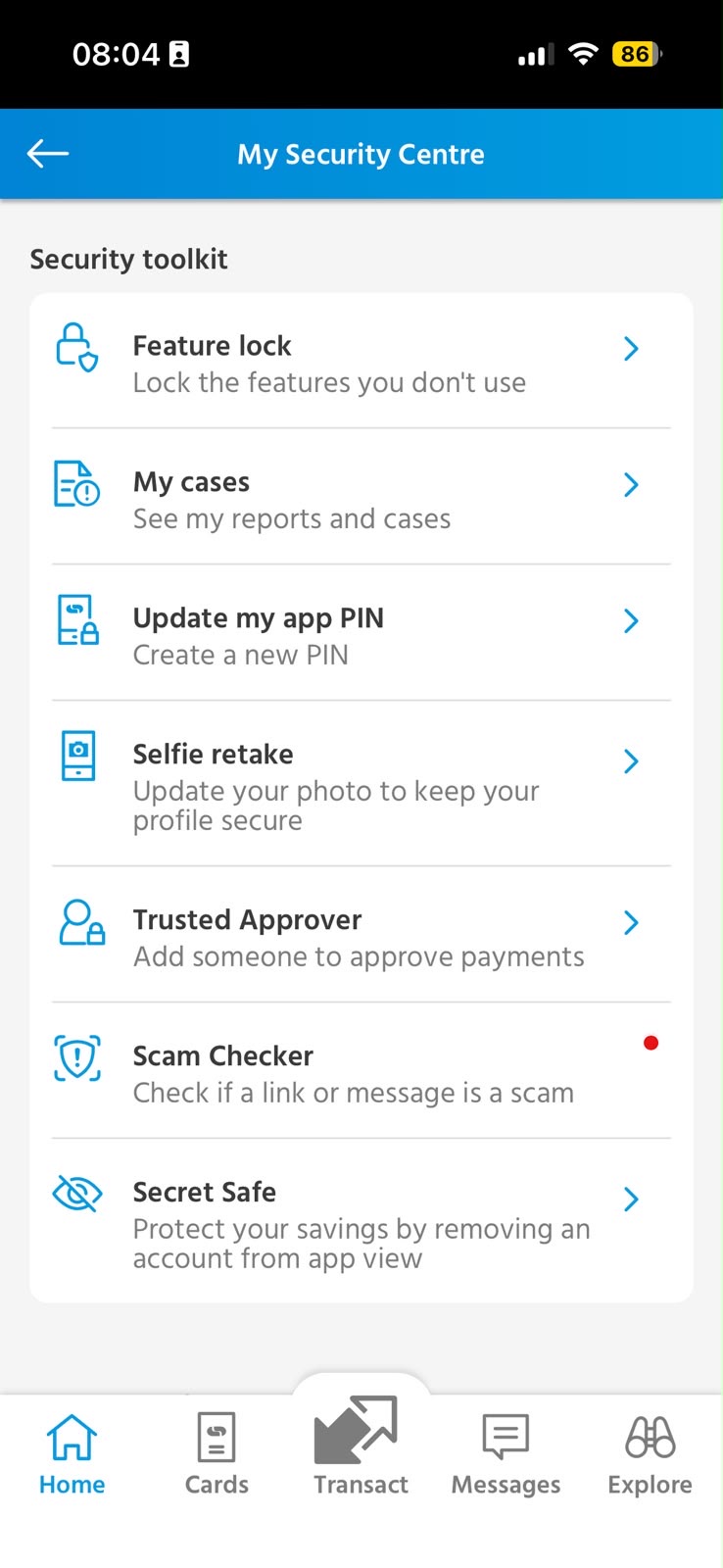
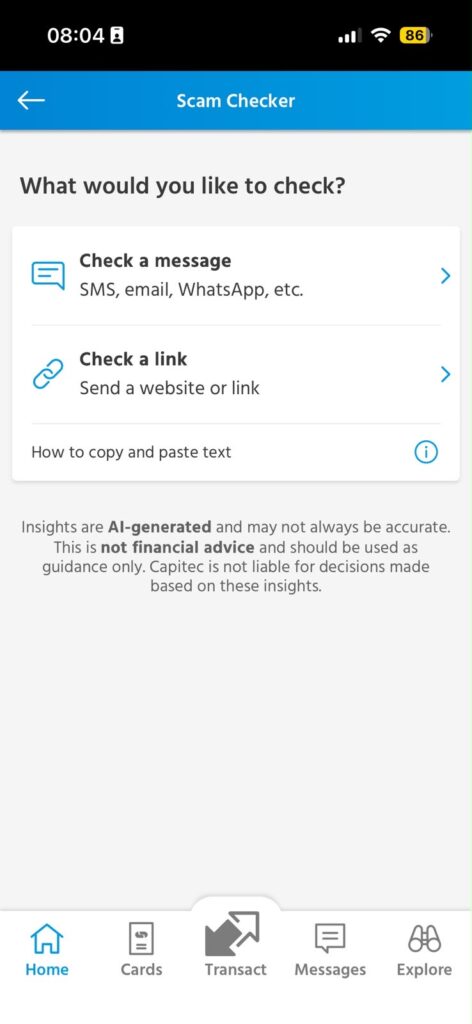
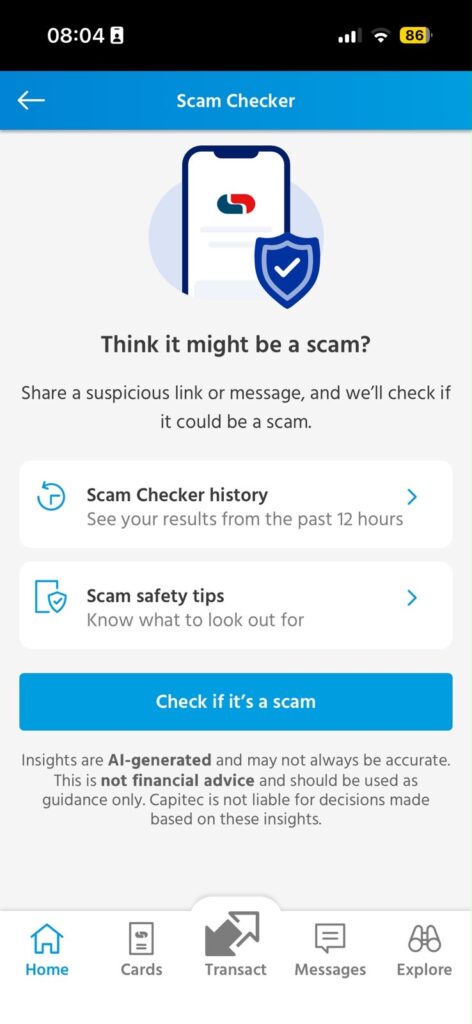
Capitec is introducing Scam Checker, an AI tool that gives an assessment on suspicious links and SMS messages before they click, reply or pay. The tool gives clients a risk rating and a clear explanation, offering practical support at the moment they are unsure whether to trust what they have received.
According to SABRIC’s Annual Crime Stats 2025 report, digital banking fraud cost South Africans R2.41 billion in 2025, a 29.2% increase compared with the previous year. The report states that digital banking crime is driven mainly by social engineering and manipulation rather than direct attacks on banking systems.
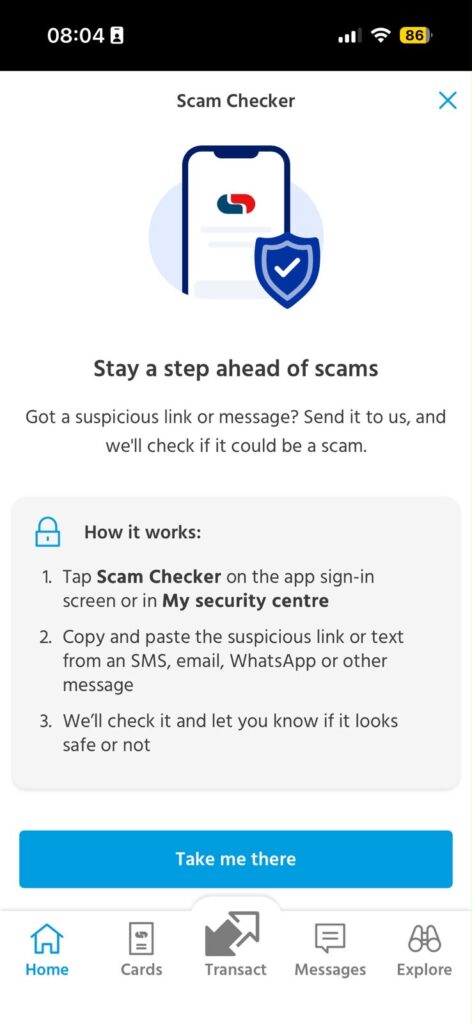
Capitec clients can submit a suspicious link or text through Scam Checker in the Capitec app. A result is returned within moments, rated on a three-level scale: green for low risk, amber for medium risk and red for high risk, each with a clear explanation. For example, a link impersonating a courier company may receive a red rating with an explanation of the warning signs identified.
A low-risk result is not a guarantee that a message is genuine. The low-risk result tells you that the link itself points to a genuine website, however it does not verify the person who sent it to you, the story in the message or what you’re being asked when you get to the website. A real link can still arrive inside a scam.
“Most scams do not start with an attack on a bank’s systems; they start with a message to a client. By the time a suspicious transaction reaches us, the client has often already been persuaded that everything is legitimate. The moment that matters most comes earlier, when someone looks at a message and quietly wonders whether it is real or not. That is exactly where we want to be able to help,” says Andrew Baker, Group CIO at Capitec.
Check suspicious messages before signing in
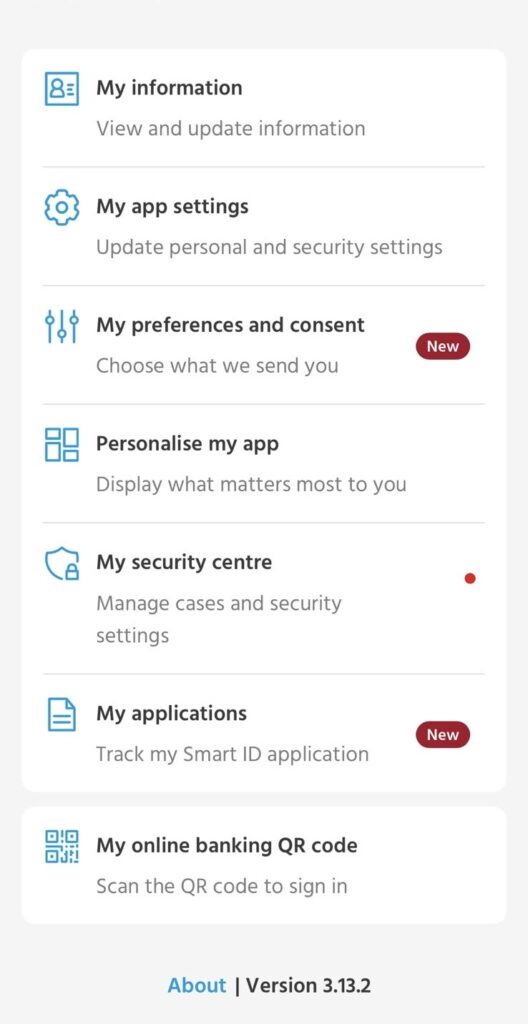
Scam Checker will be accessed in My Security Centre in the Capitec app and on the app sign-in screen. Access from the sign-in screen means clients can submit suspicious content for assessment before signing in.
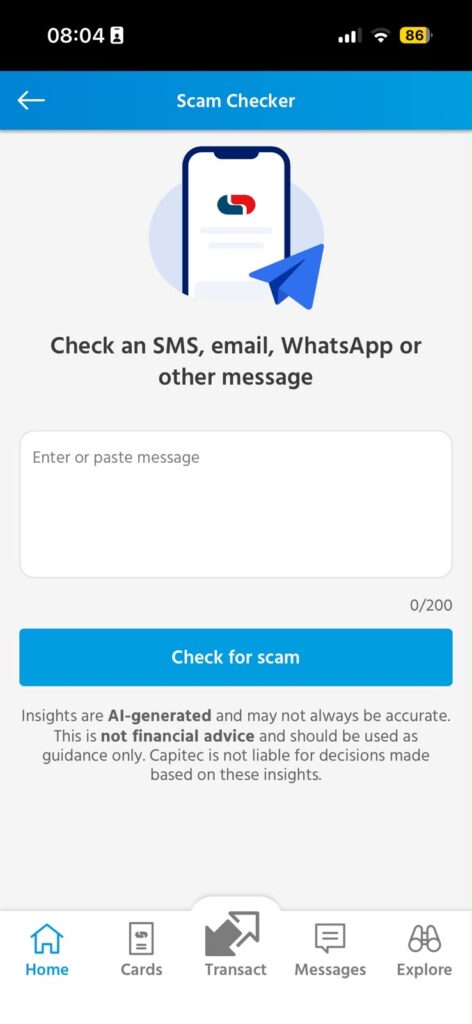
“When it is easy for the client to verify if a text or WhatsApp message is real or not, it is more likely that people will check before they click rather than after the damage is done,” says Baker.
Trusted Approver: a human layer in development
Alongside Scam Checker, Capitec is developing Trusted Approver, a separate feature designed to let clients nominate a trusted person to approve payments before money leaves their account. Under the proposed functionality, the approver would receive a notification through their own Capitec app and have 12 hours to approve or decline. They would also be able to pause the nominating client’s app and freeze their cards on their behalf if needed. Trusted Approver is still in development and is not part of the current Scam Checker rollout.
The feature is intended to give clients who want additional support a way to involve someone they know and trust, extending the principle of a second opinion to payment decisions. “Scams disproportionately hurt the people who can least afford to lose money, and protection against them should be accessible to everyone,” says Baker.
Intelligence that can support wider protection
Checks can also help build a clearer picture of scam activity. When Scam Checker reviews a suspected scam site, it can surface details used to collect money, including bank account numbers, payment references and patterns connecting one campaign to the next. These insights can support efforts to identify threats affecting more than one client.
“A scam is almost never aimed at just one person. The same fake courier site or fraudulent investment page is typically sent to thousands of people at once. Every check is a gift to the client who runs it, and potentially a source of protection for everyone else,” says Baker.
Scam Checker is rolling out progressively to Capitec clients over the coming weeks.