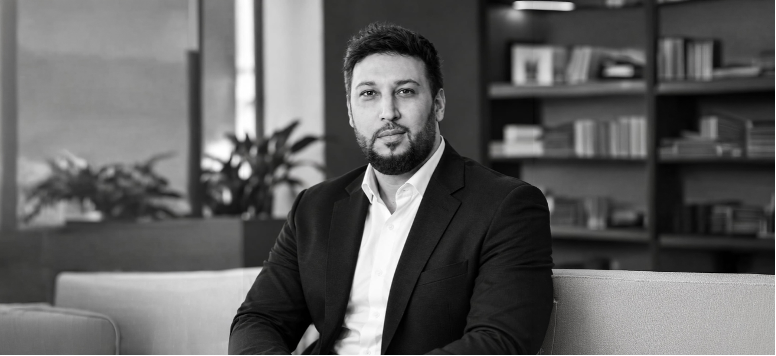
The advertising industry has long celebrated speed, productivity and the ability to deliver the seemingly impossible. However, as artificial intelligence transforms the creative process, Penquin’s Chief Creative Officer, Albert De Andrade, believes the industry has an opportunity to rethink what productivity means, and what it takes to produce truly great work.
As South Africa marks Mental Health Awareness Month, Albert thinks the conversation needs to extend beyond the demands of the job to consider the people responsible for the ideas that drive the industry forward.
In an environment driven by tight deadlines, constant demands and the pressure to produce more, faster, Albert explains that the industry risks losing sight of what makes creativity valuable in the first place: the distinctly human ability to think differently, make unexpected connections and turn ideas into something meaningful.
“Creativity is not a production line. It is deeply human,” Albert says. “It comes from curiosity, emotion, vulnerability, lived experience and our ability to see connections others don’t.”
As AI becomes increasingly capable of generating concepts, conducting research, visualising ideas and accelerating production, Albert thinks its greatest opportunity lies not in expecting people to compete with machines, but in giving them more room to do what makes them uniquely creative.
Rather than viewing AI purely as a threat to creative careers, he sees the technology as a chance to reclaim the time and mental space that meaningful creative thinking requires.
“Now that machines can behave like machines, perhaps we can finally give creatives the space to be human again. To be curious, to question, to explore, to make mistakes, to challenge convention, to connect seemingly unrelated things and, sometimes, simply to have the mental space to think,” he says.
For Albert this represents a fundamental shift in how agencies should approach innovation. AI can help remove friction, accelerate repetitive tasks and expand the possibilities available to creative teams. But efficiency alone is not the measure of its success. The real value lies in what people can do with the time and freedom that technology creates.
“That is why I believe the real opportunity of AI is much bigger than efficiency,” he says. “Used intelligently, technology can remove friction, accelerate repetitive tasks and open up more space for human imagination.”
As access to AI becomes increasingly democratised, the technology itself is unlikely to remain a competitive differentiator for long. Instead, Albert says the advantage will belong to those who can bring human judgement, cultural understanding and originality to the process.
“Having the technology will no longer be the advantage. Humanity will. Taste, judgement, empathy, intuition, cultural understanding and the courage to recognise the one idea worth fighting for will become even more valuable,” he explains.
The distinction is important in an industry where the ability to generate multiple concepts does not necessarily translate into distinctive creative work. While AI can offer a seemingly endless stream of possibilities, selecting an idea that resonates with people requires a deeper understanding of context, emotion and culture.
“AI can generate hundreds of possibilities, but possibility is not the same as originality. AI can generate. Humans can imagine. And human imagination gives ideas meaning,” Albert continues.
This shift also places a greater responsibility on creative leaders. As agencies navigate new technologies, changing client expectations and increasing pressure to deliver, Albert believes leadership must focus on creating the conditions in which people can do their best work, rather than simply demanding more output.
That means embracing technology while protecting curiosity, individuality and the freedom to experiment. It means recognising that the creative process cannot always be measured by speed or volume, and that giving people room to explore an idea can be just as valuable as finding a faster way to execute it.
“For me, this is where the next era of creative leadership begins. Our responsibility is not to extract as much creativity from people as possible, but to create the conditions in which great creativity can flourish,” he says. “Innovation is not only about adopting the newest tool; sometimes the most innovative thing we can do is create the space for people to think.”
As AI continues to reshape how the advertising industry works, Albert believes the challenge is not simply to determine what technology can do, but to be intentional about how it is used and what it makes possible for the people behind the work.
For Penquin, the conversation is ultimately about ensuring that technological progress strengthens the creative process rather than reducing it to a race for greater speed and output. Because while AI may change how ideas are developed, the human perspective that gives those ideas relevance and meaning remains essential.
“AI may change how we create, but our humanity will determine why we create and whether what we create matters,” Albert concludes. “If we want to protect the future of creativity, perhaps we should start by protecting the human behind the idea.”