Fraud across Africa is becoming increasingly sophisticated, with deepfake scams, organised fraud networks and AI-powered attacks emerging as some of the continent’s most significant financial crime threats, according to the latest findings from Sumsub’s Identity Fraud Report 2026-2027.
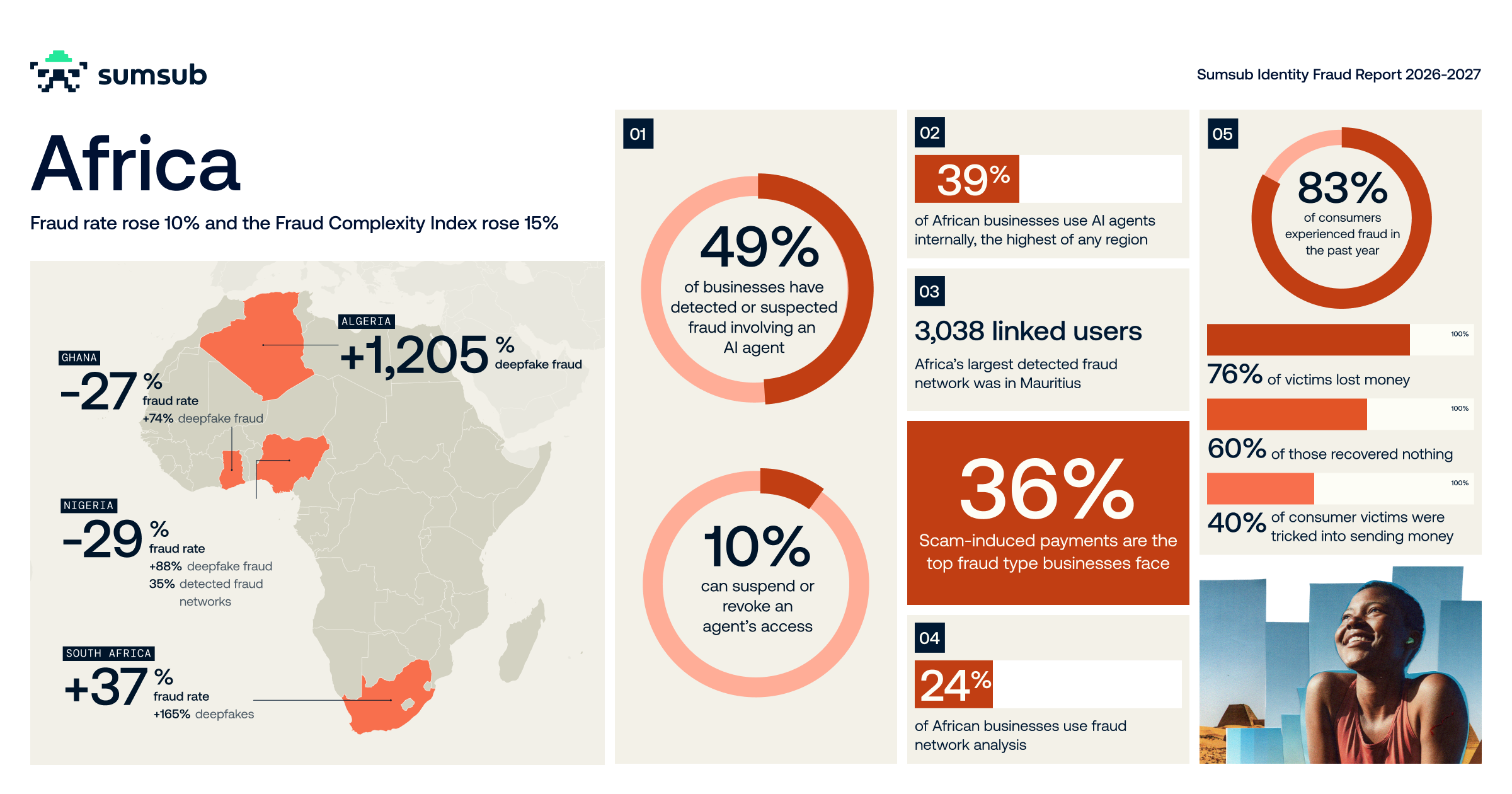
The report found that 75% of African businesses experienced confirmed or suspected fraud activity during the past year, while 83% of consumers reported being targeted by fraudsters. Despite growing awareness and investments in fraud prevention, the financial toll remains severe, with 60% of victims who lost money unable to recover any of their losses.
As fraudsters adopt highly complex technologies and multi-step tactics, the continent has become a key battleground in the global fight against financial crime.
“Africa is one of the world’s most dynamic digital growth markets, with businesses rapidly adopting new technologies to drive financial inclusion and innovation. However, the same technologies creating opportunity are also creating new opportunities for fraudsters. As fraud becomes more complex and organized, companies need a proactive, intelligence-led multi-layered approach to identity verification and fraud prevention,” said Hannes Bezuidenhout, VP Sales, Africa at Sumsub.
Key Findings:
- Over 2025-2026, average identity fraud rate in Africa increased by 10%, while fraud complexity grew by 15%.
- In some African markets, fraud rates grew dramatically YoY: +155% in Sudan, +106% in Niger, +102% in Botswana; fraud growth trends were noticed in South Africa (+37%), Cote D’ivoire (+22%), Uganda (+11%).
- In selected countries, overall fraud rates declined YoY: Kenya (-42%), Nigeria (-29%), Ghana (-27%), Mauritius (-16%), but sophistication manifested.
- 49% of businesses detected or suspected fraud involving AI agents.
- Nigeria accounted for 35% of fraud networks detected across Africa.
- Deepfake fraud in Algeria surged by 1,205% year-on-year, global record.
Organised Fraud Networks Expand Across the Continent
One of the report’s most significant findings is the growing prevalence of organised fraud rings. Criminals are increasingly operating as coordinated networks rather than individuals, enabling them to scale attacks across multiple platforms, institutions and jurisdictions. These networks are an advanced form of coordinated fraud that may still evade security systems: accounts can be compromised at any time, turning a previously trusted profile into a risk signal for internal systems.
According to the report, Nigeria accounted for 35% of all fraud networks identified across Africa, making it the continent’s largest source of detected fraud network activity. The largest network uncovered in Africa was located in Mauritius, where investigators identified a group comprising 3 038 connected users. Yet according to Sumsub Fraud Exposure Survey 2026, only 24% of African businesses use fraud network analysis tools.
The findings suggest that fraudsters are increasingly leveraging interconnected accounts, shared devices and coordinated identities to evade detection, underscoring the need for businesses to complement traditional identity checks with network analysis and behavioural monitoring tools.
Deepfakes Become a Major Fraud Challenge
The report highlights a sharp rise in deepfake-enabled fraud across Africa as criminals increasingly leverage AI-generated identities, videos and images to bypass verification systems and commit fraud. Algeria recorded the highest increase in deepfake fraud in the world, with cases surging by 1,205% year-on-year. Significant growth was also recorded in:
- Côte d’Ivoire: 291% increase in deepfake fraud cases year-on-year.
- Zimbabwe: 246% increase in deepfake fraud cases year-on-year.
- Tunisia: 219% increase in deepfake fraud cases year-on-year.
- Ethiopia: 126% increase in deepfake fraud cases year-on-year.
- Uganda: 106% increase in deepfake fraud cases year-on-year.
- Ghana: 74% increase in deepfake fraud cases year-on-year.
In some markets, overall fraud rates fell while deepfakes surged:
- Nigeria: average fraud rate fell 29%, deepfakes rose 88% YoY.
- Morocco: average fraud rate fell 67%, deepfakes rose 203% YoY.
South Africa showed both overall identity fraud rate (+37%) and deepfake incidents (+165%) increases.
Africa Leads the World with Businesses Using AI Agents, but They Create New Fraud Risks
In 2025, Sumsub introduced AI fraud agents as a new global threat for both people and businesses. This year, we’ve seen agentic use and fraud exposure expanding and getting into media headlines all over the world, raising huge concern.
2026 Survey data reveals that 39% of African companies use AI agents internally, the highest share among all regions, while 41% prepare to use them. As businesses increasingly deploy AI agents to automate operations and customer interactions, fraudsters are exploiting new vulnerabilities.
While AI technologies offer significant operational benefits, many organisations have yet to establish effective governance and security controls to manage associated risks. Fewer than half of African businesses verify who authorizes AI agents, and only 10% can suspend them.
Nearly half (49%) of African businesses reported detecting or suspecting fraud involving AI agents, making it one of the fastest-growing emerging threats identified in the report.
“AI agents are becoming the connective tissue between people and their data, and that convenience should not come at the cost of control,” concludes Mick Amelishko, AI Advocate at Sumsub.