As AI transforms the workplace, some of the professionals whose businesses increasingly depend on it are questioning whether their roles will remain relevant. Nowhere is that paradox more apparent than in creative project management, where AI is not removing the need for great project managers; it is fundamentally upgrading what we need them to do.
As generative AI becomes embedded in creative production, many assume that functions traditionally associated with project management, like scheduling, consolidating information, tracking deliverables, summarising meetings, coordinating workflows, and reporting on progress, can increasingly be automated.
That assumption is partly correct because AI can do many of those things, and it will increasingly do so. The mistaken conclusion, however, is that this makes the project manager less valuable.
In an AI-first creative business, I would argue the opposite is happening. We need excellent project managers more than ever; in fact, we’re actively trying to hire hundreds of them across the globe. What we need less of is project management built primarily around administration.
This offers a useful glimpse into the broader future of work.
For years, much of the AI employment debate has focused on occupations: which jobs will disappear, which will survive, and which new ones will emerge, but occupations are bundles of tasks. AI doesn’t necessarily eliminate an entire profession just because it can perform some of those tasks. It just shifts where the economic value in that profession lies, and project management is a good example.
If a project manager spends hours manually consolidating information from multiple teams, producing status reports, rewriting briefs, or chasing down information that technology can surface in minutes, automating that work shouldn’t be seen as a threat; it should be seen as reclaimed capacity.
The question is really about administration versus orchestration and what the person does with it. Let’s be honest, creative businesses have always had a coordination problem.
A major global campaign can involve strategists, designers, copywriters, producers, technologists, clients, markets, platforms, and increasingly several AI systems working across multiple time zones, and generative AI can dramatically increase the speed at which individual parts of that system operate.
Generative AI lets strategists interrogate information faster, creative teams explore more territory, content adapt across more formats, and teams consolidate vast amounts of information in a fraction of the time. However, as the speed and volume of creative production increase, so does the complexity of keeping everything aligned, making effective coordination more important than ever.
Someone still needs to understand what the client is trying to achieve, decide what needs to happen next, identify dependencies, make judgement calls, question whether an output is useful, and ensure ten faster processes move toward the same objective.
While that’s always been the job of the project manager, the need is becoming more prevalent as more generative AI is adopted. The future project manager therefore looks less like a work administrator and more like an orchestrator of people, technology, and decisions.
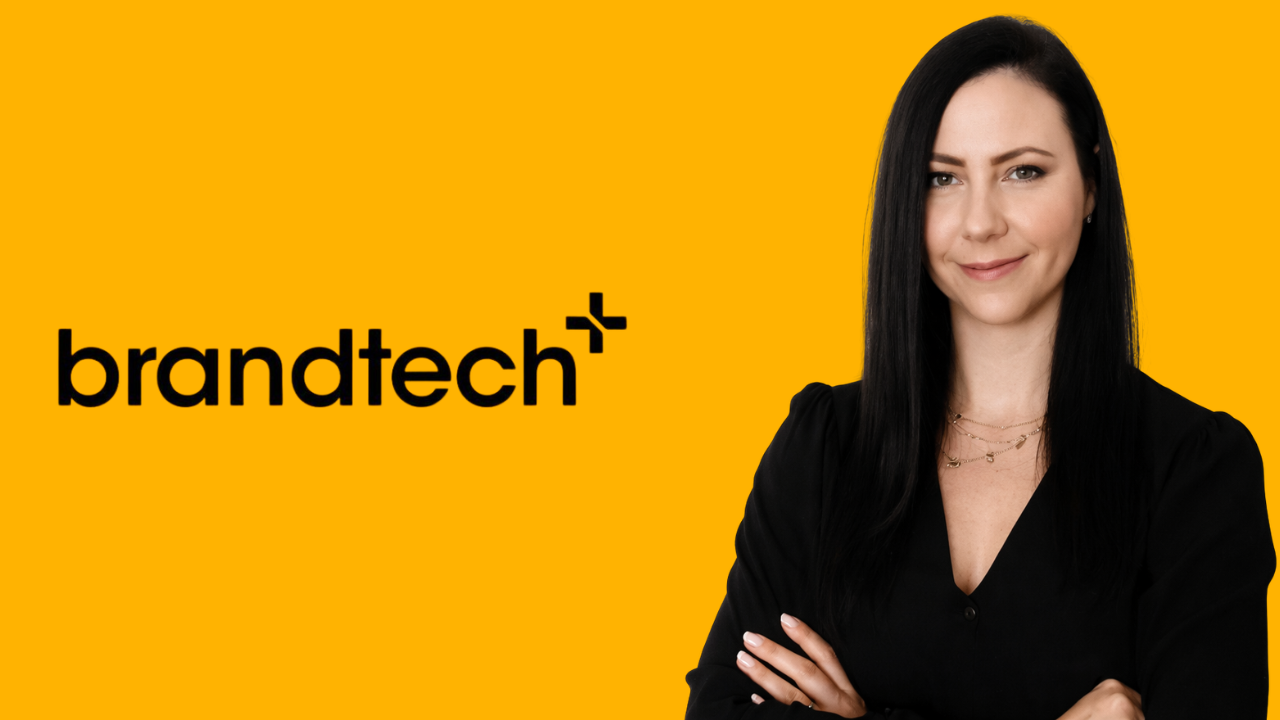
In my experience, that shift demands more capable project managers, not fewer, especially as AI fluency becomes an essential part of professional competence. At Brandtech+, this is already reflected in our recruitment priorities: project management roles account for 36% of all our South African hires so far this year.
However, this has an uncomfortable implication for people already in the profession. Being good at project management while refusing to work with AI will increasingly be difficult to reconcile.
I’m not saying that this means project managers need to become machine-learning engineers or spend their lives learning every new tool released onto the market. Still, they need curiosity and enough AI fluency to recognise where the technology can improve the work.
Can a process that takes three hours take 30 minutes? Can information from several workstreams be consolidated automatically? Can you remove a recurring administrative task altogether? Can an AI system surface a potential bottleneck before it becomes a missed deadline?
Those questions are rapidly becoming part of project management itself. The skill is therefore not simply knowing how to prompt an AI tool, but understanding a workflow well enough to know where AI should, and should not, be used.
This distinction matters because, while AI can summarise a client conversation, it cannot necessarily recognise hesitation in the room when an idea is presented. Yes, AI can consolidate feedback, but it cannot always distinguish between an instruction that should be followed literally and one that requires a difficult conversation with a stakeholder. The same for workflows: AI can optimise a workflow, but it cannot take accountability for the consequences when something goes wrong.
These remain deeply human management responsibilities, and we need to rethink how we develop talent, which also challenges employers, who can’t just advertise yesterday’s job descriptions and expect to attract tomorrow’s workforce.
If AI is changing the work, organisations need to be explicit about which capabilities are becoming more valuable, and they also need to give people the opportunity to develop them.
We have an opportunity to develop creative and operational talent capable of working inside increasingly sophisticated global production environments. This matters because that opportunity will narrow if experienced professionals see AI capability as belonging to technologists rather than as part of their own professional toolkit.
Employers also have responsibilities here, because telling employees to ‘use AI’ is not a workforce strategy. People need access to the technology, practical training and, critically, permission to experiment with how it can improve their work.
Organisations that get this right will not simply bolt AI onto existing jobs; they will redesign jobs around what humans and machines do best, and for project managers, that could make the profession considerably more interesting.
Spending less time compiling status reports, moving information between people, and doing less administration will free up more time to understand why a project is going off course, remove the obstacles preventing those people from doing their best work, and add more judgement, leadership and accountability.
This is the upgrade, not the disappearance of project management. So, if you’re a project manager or, in fact, any professional in any industry, stop asking whether AI can do part of your job or will replace parts of your job, because it can and will. Rather, ask a more useful question: what becomes possible when it does?