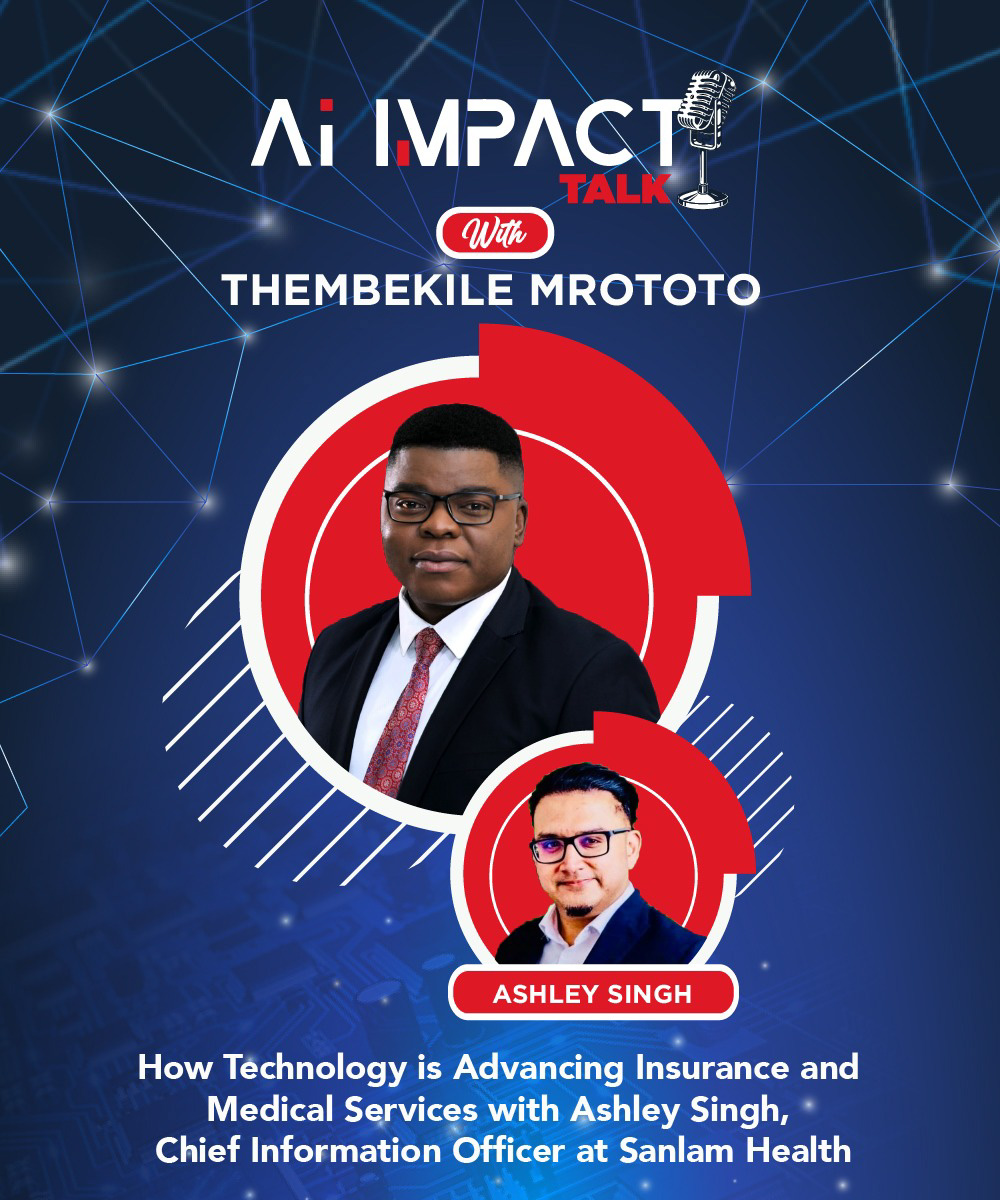
On an episode of AI Impact Talk, hosted by Thembekile Mrototo, Sanlam’s Chief Information Officer, Ashley Singh, unpacks how Africa’s largest non-banking financial services group is using AI to connect healthcare and finance—without losing the human touch.
“AI isn’t separate from us,” Singh explains. “It’s an extension—like wearing glasses.” This sets the tone for a discussion focused on using technology to enhance care, not replace it.
Sanlam’s long-term strategy goes beyond financial products. Singh points out a gap in their offering: medical services. That’s where Afrocentric comes in. The partnership aims to create a one-stop shop for healthcare, retirement, risk, and investment—under one ecosystem.
As the continent’s largest player in its category, Sanlam has the resources to back innovation. Afrocentric, in turn, benefits from Sanlam’s tech investment, gaining access to AI tools typically out of reach for smaller healthcare organisations.
From “What’s the Matter?” to “What Matters?”
At the heart of the strategy is a shift to value-based care, a concept Singh credits to Netcare. Rather than reacting to illness, this approach uses AI to proactively manage individual health needs—offering preventative care and personalised support, particularly for chronic conditions like diabetes.
AI helps the system spot risk factors early, improving outcomes and quality of life. “We analyse you for conditions that haven’t even surfaced yet and introduce measures to help you enjoy your lifestyle,” Singh says.
AI doesn’t just streamline processes; it anticipates them. Singh notes that insurance has traditionally been seen as “a grudge purchase,” but with AI, it becomes timely and relevant—by predicting needs before they arise.
This is particularly powerful in retirement planning. “At 50, AI can show how your life is likely to trend, and what you’ll need—financially and otherwise,” says Singh. The result is smarter, more personalized planning.
Tech That Keeps the Human at the Centre
While AI can drive efficiency, Singh is clear: Sanlam’s approach is human-first. Clients can choose the level of automation they’re comfortable with. “You can have a warm touch or an AI touch—it’s transparent and your choice,” he explains.
Internally, Sanlam trains all staff on what AI is, how it works, and where it fits. The aim isn’t to impress with technology, but to create a seamless, effective experience. “The member cares about the product, not how it’s delivered,” Singh says.
AI also plays a major role in security. With fraud now digital and more complex, Sanlam invests equally in AI and cybersecurity. “AI systems automatically flag abnormal activity,” says Singh. “It creates governance you don’t even notice.”
This dual role—AI as both the tool and the watchdog—is essential for industries as sensitive as finance and healthcare.
Singh believes AI could reshape access to healthcare in South Africa, where large segments of the population are underserved. “AI can make healthcare more affordable, more personalised, and more widely available,” he says.
If organisations like Afrocentric get AI right, Singh believes it can help narrow the access gap between high-income and low-income groups—making healthcare more equitable at scale.
When asked what kind of leadership AI requires, Singh gives an unexpected answer: not tech leadership, but people-first leadership.
“You need someone who can bring together the human and the tech—not just chase profits or innovation for its own sake,” he says. The priority should always be solving real problems, not just building systems.
“Spinning up a new tool is easy. The hard part is applying it meaningfully.”
Of course, challenges remain. South African data laws prevent personal data from being processed overseas, which limits access to some global AI systems. Singh also points out the heavy processing power needed to run advanced models.
Still, he’s optimistic: “We’re seeing policy shifts and improvements in cost structures that will make a difference soon.”
For Singh, the impact of AI is personal: “Fundamentally, it means making life easier and better.” That philosophy guides Sanlam’s broader vision—where tech supports care, and where innovation doesn’t come at the expense of empathy.
By using AI to bridge healthcare and finance, Sanlam is building more than just efficiency. It’s building trust, equity, and a model others across the continent could follow.
About AI-Impact Talk and AI-Impact Online Platform
AI-Impact Talk brings you exclusive interviews with industry leaders, visionaries, and innovators shaping the future of technology. From the latest AI-powered tools to emerging trends and breakthroughs, we offer fresh insights and behind-the-scenes perspectives from the frontlines of artificial intelligence.
Get in touch: WhatsApp +27 71 260 0299 | Email: info@ai-impact.co.za
AI-Impact is a digital platform dedicated to showcasing the transformative potential of artificial intelligence. Our mission is to provide thought-provoking content, expert analysis, real-world insights, and diverse perspectives from the voices driving innovation across industries—keeping our audience informed and inspired in an ever-evolving digital world.