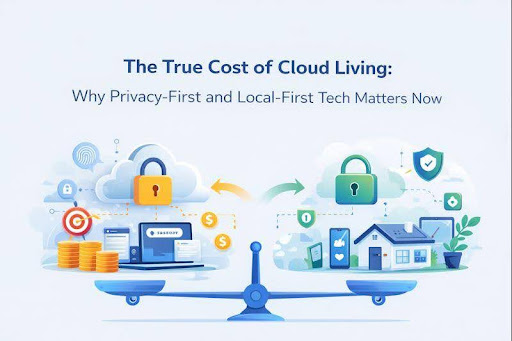
Over the past decade, cloud computing has become the foundation of modern digital life. From personal photos stored online to enterprise applications running on remote servers, the cloud has made data accessible, scalable, and convenient. However, this convenience comes with hidden costs that extend beyond subscription fees or storage limits. The increasing dependence on centralized cloud infrastructure has raised serious concerns about data privacy, control, and long-term sustainability. As users and organizations become more aware of these issues, the movement toward privacy-first and local-first technology is gaining momentum, redefining what it means to live and work in the digital age.
The Convenience Trap of the Cloud
Cloud-based services have revolutionized how people store information and access digital tools. The ability to sync data across multiple devices, collaborate in real time, and scale storage without managing physical hardware has been transformative. Yet, the very convenience that makes the cloud so appealing also leads to over-reliance.
Most users rarely think about where their data is stored or who has access to it. Personal photos, business documents, and even voice recordings are routinely uploaded to servers controlled by a handful of large corporations. This creates a centralized system where vast amounts of sensitive data are collected and analyzed, often for advertising, surveillance, or algorithmic profiling. While these services may appear “free,” they are often paid for with users’ personal information.
This dependence on third-party servers also introduces vulnerabilities. Outages, data breaches, and service shutdowns can result in lost access or exposure of sensitive data. The illusion of infinite storage and security often masks the risks of entrusting critical information to systems that users do not truly control.
The Hidden Price of Data Dependence
The real cost of living in the cloud extends far beyond the financial expenses of subscriptions or usage fees. Every time data passes through or is stored on external servers, it becomes subject to corporate policies and legal jurisdictions that users may not fully understand. Governments can request access to data stored in specific regions, and companies are often obligated to comply, sometimes without user consent or awareness.
Moreover, cloud storage consumes massive amounts of energy. Data centers require continuous power to maintain servers and cooling systems, contributing to growing carbon emissions. The environmental footprint of the cloud, though invisible to most users, is significant. As more of the world’s activities move online, the sustainability of centralized cloud infrastructure becomes an increasingly urgent issue.
From a personal standpoint, cloud dependence can also erode digital autonomy. When users rely on platforms that lock data behind proprietary systems, they risk losing control if those services change policies, increase prices, or shut down. True digital ownership is compromised when information is perpetually tied to someone else’s servers.
The Rise of Privacy-First Technology
Privacy-first technology offers a compelling alternative by placing user control and transparency at the core of design. Instead of collecting unnecessary data or relying on third-party analytics, privacy-first tools minimize tracking and prioritize user consent. These technologies often use encryption and decentralized systems to ensure that only the user has access to their personal information.
Privacy-focused companies are now building messaging apps, browsers, and storage solutions that respect user autonomy. End-to-end encryption in communication platforms, for example, prevents service providers from reading user messages. Similarly, privacy-oriented search engines and browsers allow users to navigate the web without being constantly profiled.
The growing adoption of privacy-first solutions reflects a shift in public awareness. People are increasingly valuing transparency and data protection as integral parts of digital well-being. As privacy becomes a competitive advantage, more developers are rethinking how products handle data by default.
The Promise of Local-First Computing
While privacy-first tools focus on data protection, local-first computing emphasizes data ownership and reliability. In a local-first model, data is stored and processed primarily on the user’s device rather than a remote server. Synchronization between devices happens selectively and securely, ensuring that users retain full control over their information.
Local-first applications can work offline, provide faster performance, and eliminate dependency on external networks. For example, note-taking or productivity apps built on local-first principles allow users to edit and save files even without an internet connection, syncing changes only when needed. This approach not only enhances reliability but also protects data from unauthorized access or network failures.
By keeping data closer to the user, local-first systems promote long-term sustainability. They reduce the energy consumption associated with constant data transmission and storage in centralized data centers. This makes local-first technology both environmentally responsible and more resilient to global infrastructure disruptions.
A Path Toward Digital Balance
The future of technology should not be about abandoning the cloud entirely but about using it more wisely. Cloud systems still offer immense benefits for collaboration, scalability, and global connectivity. However, these advantages must be balanced with privacy-first and local-first principles that protect users’ autonomy and well-being.
Developers and organizations can embrace hybrid models where sensitive information is processed locally, while shared data is securely managed in the cloud. This balanced approach preserves the convenience of online services without sacrificing control or privacy. Governments and regulators also have a role to play by enforcing stricter data protection standards and promoting transparency in digital services.
Conclusion
The convenience of the cloud has transformed modern life, but it has also blurred the boundaries of ownership, privacy, and control. As society becomes more dependent on digital ecosystems, recognizing the hidden costs of cloud living is crucial. Privacy-first and local-first technologies offer a path toward restoring balance, empowering individuals to reclaim ownership of their data while maintaining the benefits of connectivity.
In an age defined by digital dependency, the future belongs to technologies that respect both human privacy and digital autonomy, ensuring that progress serves people and not the other way around.